


Prof. Amar Kant Jha
(Retired, T.U.) Rajbiraj
The Madhesis, the Tharus, and other ethnic groups feel extremely discontented with the new constitution as it does not ensure their due participation and representation in state-organs. Though the Madhesis and the Tharus have imposed a general strike in the Terai for about eighty days and a blockade at the entry points of Indian border for about fifty days, these protests have so far yielded no tangible results.
One of the most contentious issues is the federal design of seven provinces delineated in the new constitution which the Tharu–Madhesis vehemently oppose, accusing the leaders of the three big parties of violating their agreements reached with the government in 2007. The disgruntled groups further censure them for being unjust by adopting a federal design that promotes the interests of their own privileged hill high castes, debarring the oppressed groups from securing any reasonable share/participation in power-structure.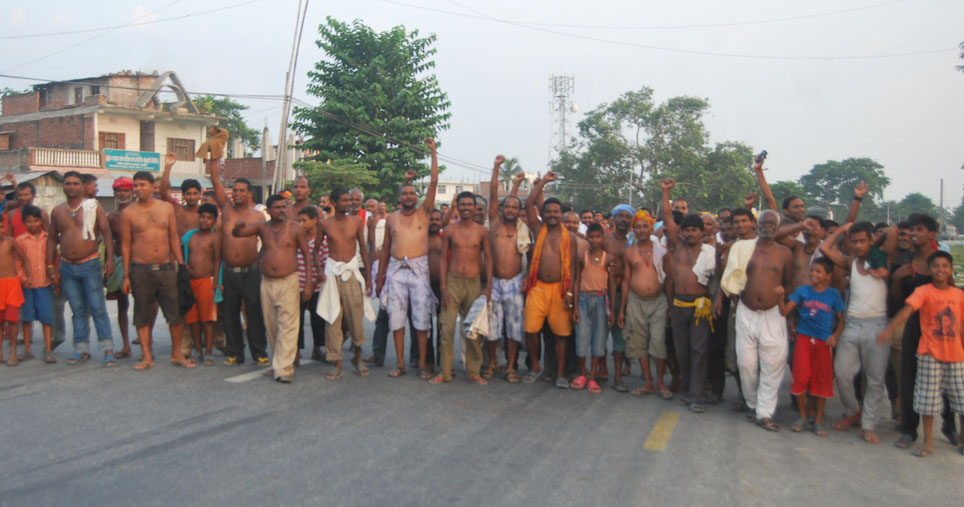
In fact, the motive behind restructuring the state or introducing federalism in the country was essentially to eliminate the age-long discrimination based on ethnicity, language, gender, region, etc. by enabling the deprived groups to obtain rightful shares in state-organs. This purpose for restructuring the state was explicitly stated in the historic document of six-point agenda of Jan Andolan II and also in the twelve-point agreement signed between Seven-Party Alliance and the Maoists and, later, the Madhes Andolan further mandated to adopt federalism as a ”shared-rule” system–all these being the base for Article 138 of the Interim Constitution. Therefore, federating the country against its motive must be construed as a betrayal of the people’s trust and an obnoxious act against Jan Andolan II.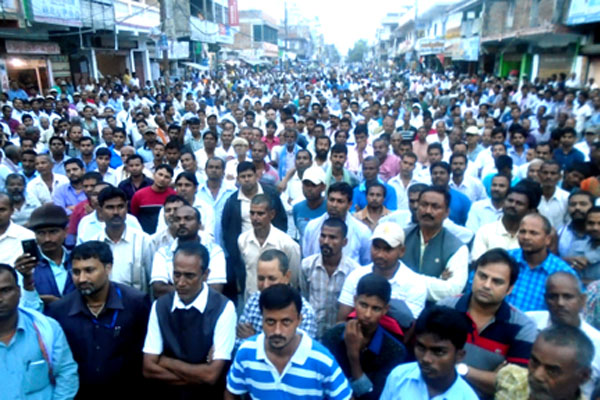
Here, it is necessary to assess the federal design from the perspective of the discriminated groups’ share in state-organs. The demographics of the seven provinces reveal the following facts- Province No 1, consisting of eleven eastern hill districts together with three eastern Terai districts contains 3,099,869 hill people, including 1,339,541 people of hill high castes and 878,286 Rai-Lumbu people, besides 1,230,379 Madhesi people. Province No 2, a truncated Terai- Madhes region from Saptari to Parsa, contains 4,824,066 Madhesi people together with 578,280 hill people. Province No. 3, consisting of 13 hill districts, including Kathmandu, contains 2,064,652 Newar-Tamang people and 2,050,377 people of hill high castes, besides others. Province No.4 consisting of 10 hill districts around Pokhara together with eastern Nawalparasi, contains 8,68,445 people of hill high castes and 693,190 Magar-Gurung people, besides others. Province No.5, consisting of five western Terai districts and five of the hills together with western Nawalparasi and eastern Rukum, contains 2,985,155 hill people, including 1,404,903 people of the hill high castes and 1,893,449 Tharu-Madhesi people. Province No.6, consisting of nine hill districts and western Rukum, contains 1,415,035 people, including 848,010 people of the hill high castes. Province No. 7, consisting of seven Far-Western hill districts together with two districts of the Terai — Kanchanpur and kailali, contains 2,562,507 people, including 1,534,728 people of hill high castes.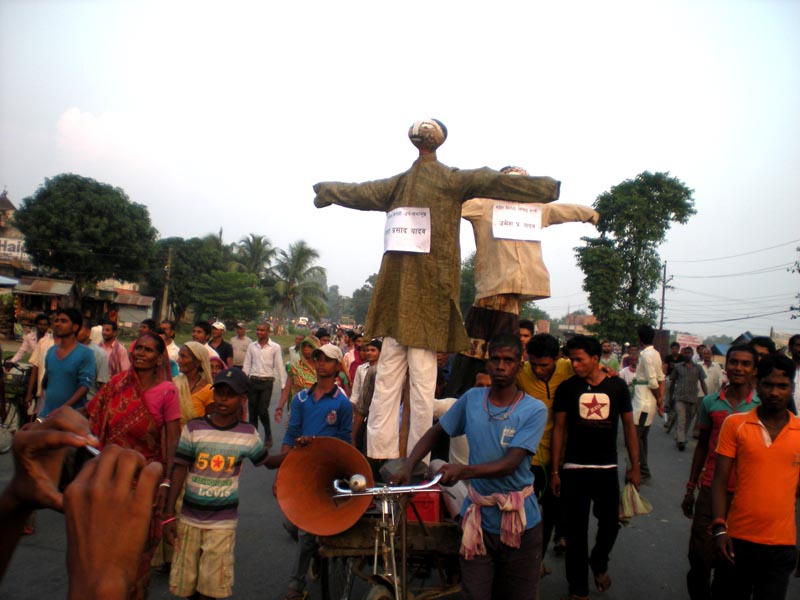
Thus, it is evident that except Province No.2, where the Madhesis are overwhelmingly in great number, the rest of six provinces are demarcated in such a manner that they are heavily dominated by the large population of hill high castes which can help them gain full authority to perpetuate their hegemony. Whereas the Newars and the Tamangs will secure some share in the power–structure of Province No. 3, about four million Tharu-Madhesis of Province No. 1,4,5, and 7, the Rais, the Limbus, the Magars, the Gurungs and other ethnic groups will remain excluded from the corridors of power.
Surely, this is a flawed federal design mainly because geographical homogeneity accepted unanimously as one of the five bases of identity for federalization has been completely violated in the eastern and the western regions of the Terai -Madhes by joining these regions with the hills creating problems for the discriminated groups for due participation in state-organs. Since the people of hill high castes are residing both in the hills and the Terai in almost equal number, they prefer a federal model mixed with both the regions so as to achieve political dominance. As hill high castes are the power elite, they plead federalism for development, not for eradicating the disparity. Even by federating the country for ending discrimination, there can equally be ample opportunity for economic prosperity. But the leaders of the three big parties did not honour their own solemn pledge of ameliorating the suppressed groups only to toe the line of their own hill high castes and adopted a discriminatory model of federalism in the counry.
Now, it is but natural for the Tharu–Madhesi agitatiors to be firmly resolved to press for forming two provinces in the Terai-Madhes. If three eastern and nine western districts of the Terai are not combined with the hills but are kept intact in the two provinces of the Terai-Madhes, this will help not only the Tharu–Madhesis but will also enable the Rais, the Limbus, the Magars and the Gurungs gain access to state-authority.
In this federal model, the Tharu-Madhesis and other ethnic groups will not only be lacking in participation in power-structure but will also be inadequately represented. For instance, out of 56 members for the National Assembly it is possible for eight Madhesis to be elected from Province No.2 but the Tharu-Madhesis will find it extremely difficult to be represented from Province No. 1,4,5 and 7. Similarly, the Rai, the Limbu, the Magar, the Gurung and other ethnic groups will lose the most in matters of both participation and representation in state-organs. In Province No. 6 and 7, as many as sixteen members will represent when the total population is just 397, 537. By identity, both the Provinces form a region of the Khas Arya, necessitating only one province. But after two or three days’ agitation in Far-Western region, the triumvirate carved Province No. 7 by splitting the western part of Province No 6 without any dialogue with the agitators. 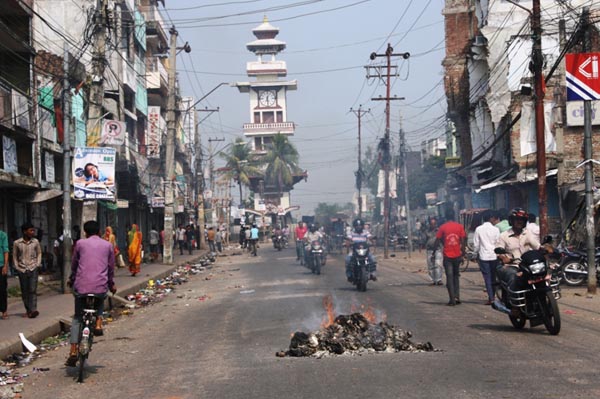
Similarly, under the first-past-the-post election system, there would be 165 constituencies in the country to elect one member from each for the House of Representatives. As these constituencies would be determined on the bases of geography and population, a discriminatory representation is discernible as the Terai-Madhes, containing 50.2% population may have only 65 constituencies while the hills may have 100 constituencies. Therefore, population should only be the criterion for determining the constituencies and also for electing members for the National Assembly.
Further, the new constitution has taken care of the fundamental right to participation of socially backward and oppressed groups in state–structure “on the basis of inclusiveness”, not “on the basis of the principle of proportional inclusiveness” as enshrined in the Interim Constitution. The deletion of the word “proportional” is a regressive move viewed with serious concern by all deprived groups.
As regards the problem of representation, the three big parties realized their grave mistakes and, so, the goverment has registered the amendments of Articles (42 and 84) as an attempt to appease the agitators. Similarly, they must also admit the mistake of devising a biased and faulty federal design and earnestly address the Tharu-Madhesis’ demand of two provinces in the Terai-Madhes to secure the latter’s equitable share/participation in state-organs. It is the agitators’ major demand and if it is not accepted, negotiations will possibly fail and the conflicts will accelerate, creating a highly volatile situation in the country.
amarkant685@yahoo.com